
Founding Engineer. Building the trace-based evaluation engine and the MCP tool layer, CLI, and SDK that turn agent failures into verified fixes.
2026–Present
Founding Engineer · PhD in AI · Co-Founder
PhD in AI · Researcher · Founding Engineer
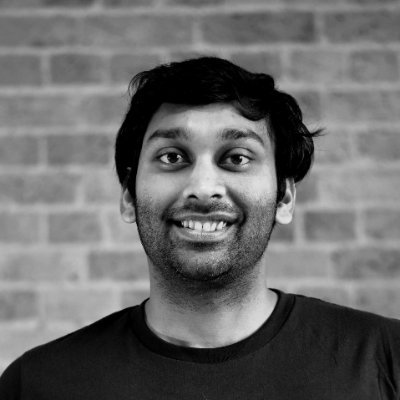
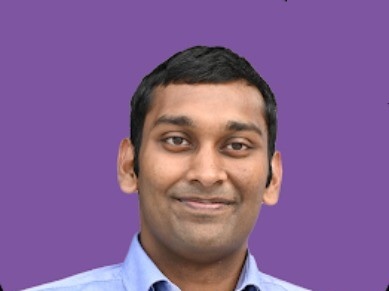
I’ve spent over a decade turning ideas into products people rely on, and I still enjoy every part of shipping them.
Building Glassray after leading applied AI at Vera. Over 10 years shipping products from first commit to production.
PhD in Artificial Intelligence from Robert Gordon University, focused on federated learning. I study how machines can learn from data without ever centralising it.
The reliability layer for AI agents: it catches the silent failures monitoring misses, then ships back a verified fix teams can trust.
Similarity-guided aggregation that makes federated learning faster and more accurate, published in Neurocomputing.
Current role
2026–Present
Doctorate
Robert Gordon University, 2024. Similarity-guided methods that make federated learning faster and more accurate while the data never leaves the device.
LangGraph orchestration with planning, routing, and tool selection, measured against real evals.
Grounding LLMs in private knowledge with retrieval pipelines built for accuracy.
Ground-truth datasets, benchmark runs, and tracing with LangSmith and Langfuse to keep agents reliable.
CLIs, SDKs, and MCP servers exposing 30+ tools, plus cloud coding agents that clear routine tickets.
Microservices and serverless on AWS and Azure, built to hold up under heavy traffic.
Slack, Teams, and Stripe integrations, plus voice agents built on LiveKit.
Privasee Group · Founding Engineer across two ventures
2025–Present
Founding Engineer. Building the trace-based evaluation engine and the MCP tool layer, CLI, and SDK that turn agent failures into verified fixes.
2026–Present

Founding Engineer. Led the move from a single-flow RAG assistant to a LangGraph multi-agent architecture with 93%+ answer accuracy, and shipped Vera’s MCP server plus Slack and Microsoft Teams integrations. Moved within the group to found Glassray.
2025–2026
Senior Software Engineer. Led full-stack development of a project progress reporting platform, carrying it from build through testing and optimisation to release.
2023–2024

Research Assistant. Built the iSee explainable-AI cockpit and CloodCBR, the world’s first microservices-based case-based reasoning framework.
2019–2023
Earlier roles: Associate Software Engineer at 99X Technology · Visiting Lecturer at IIT.

Technical Co-Founder. Scaled the LMS to 50,000+ students and 50 TB of monthly traffic, integrated five payment gateways processing 200M+ in payments, and built multilingual voice agents with LiveKit and RAG.
2020–2023

Co-Founder. Low-cost Bluetooth attendance used by over 10,000 students. Named Most Innovative Product at the RGU Startup Accelerator, 2020.
2019–2023

Co-Founder and CTO. Led engineering across more than 20 projects serving over 30,000 users.
2014–2022
PhD in Artificial Intelligence (Federated Learning), Robert Gordon University, 2019–2024. My research spans privacy-preserving learning, explainable AI, and case-based reasoning.
Doctoral research
My thesis improved federated learning on three fronts: similarity-guided model aggregation (FedSim), similarity-guided feature extraction and pruning, and defences against gradient-inversion attacks.
Similarity-guided aggregation and privacy-preserving training.
iSee, a toolkit for sharing explanation experience between users.
CloodCBR, a case-based reasoning framework built as microservices.
Defending federated models against gradient-inversion attacks.
Selected publications
C. Palihawadana, N. Wiratunga, A. Wijekoon, H. Kalutarage · 2022
C. Palihawadana, N. Wiratunga, H. Kalutarage, A. Wijekoon · 2023
I. Nkisi-Orji, C. Palihawadana, N. Wiratunga, D. Corsar, A. Wijekoon · 2022
C. Palihawadana, G. Poravi · 2018
Recognition: AWS Community Builder (Serverless), 2022 · Second Place, 3-Minute Thesis (3MT), RGU, 2022 · University of Westminster Prize for Outstanding Achievement · Member of the British Computer Society (MBCS).
Doctor of Philosophy, Artificial Intelligence. Thesis: Improving Federated Learning Performance with Similarity Guided Feature Extraction and Pruning.
2019–2024

BEng (Hons) Software Engineering. Final-year research on finding experts in Q&A platforms.
2015–2018
Notes on applied AI, multi-agent systems, and the craft of shipping products.
We benchmarked four models as judges for agent traces and found one that runs 1.5x cheaper while catching more real failures than the incumbent, with verdicts that stay stable across repeated runs.
How we built an overnight engineering shift: Claude routines pick up Linear tickets, open PRs with evidence attached, and revise until the automated review comes back clean.